
Our manufacturing process
From raw coconut husk to finished coir products
Our process starts with raw coconut husks and follows a series of managed processing and production stages. By staying closely involved from procurement to finished-product preparation, SahanLanka takes an active role in adding value at every step.
Our production operations use specialised machinery and automation designed to support efficient processing, consistent output and dependable product quality.
Production flow
The seven manufacturing stages
-
Stage 1: Coconut husk procurement
The process begins with sourcing raw coconut husks, the primary natural raw material used in coir-fibre production.
Careful attention to raw-material sourcing provides the foundation for the retting, fibre-extraction and manufacturing stages that follow.

Coconut husks, the raw material for coir fibre. Representative image. -
Stage 2: Husk preparation and traditional freshwater retting
The procured husks are placed in fresh-water tanks for traditional retting. They remain in the fresh water for several weeks, allowing the husks to undergo the retting process.
Retting is not carried out in lagoons or salt water. Once retted, the husks are transferred for fibre extraction on defibering machinery.
- Water
- Fresh water, in tanks
- Duration
- Several weeks
- Not used
- Lagoons or salt water
Illustration of husks submerged in a fresh-water retting tank. Not to scale. -
Stage 3: Fibre extraction and defibering
Mechanical defibering separates usable coir fibre from pith and other residual material, converting the prepared husks into fibre suitable for further processing.
Our specialised defibering machinery is designed to extract the fibre through a controlled, careful combing action. The aim is to separate the fibre effectively while avoiding unnecessary damage and helping preserve its natural strength.
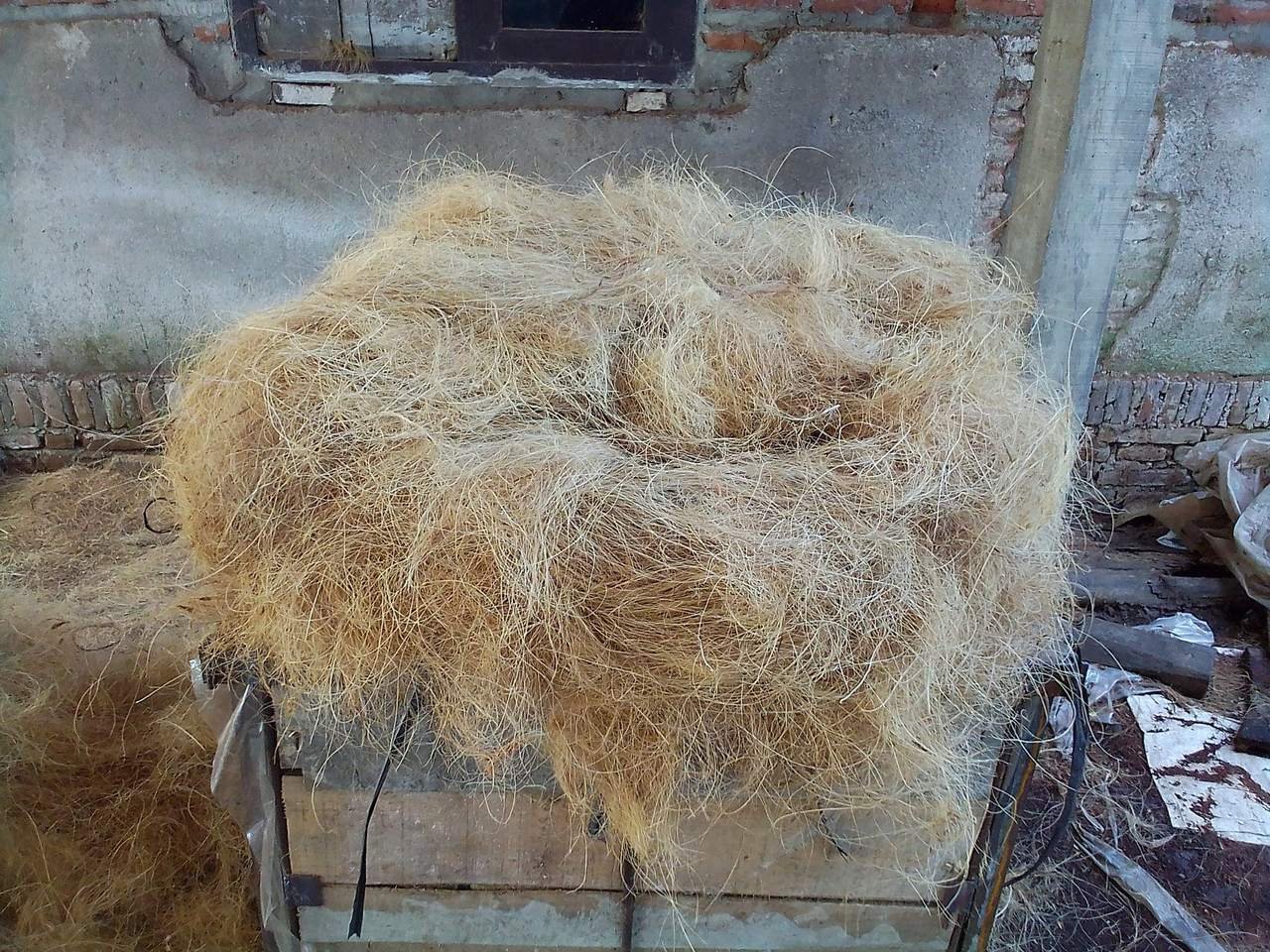
Coir fibre after separation from the husk. Representative image. -
Stage 4: Fibre processing and preparation
The extracted fibre undergoes further cleaning and preparation to meet the requirements of downstream manufacturing.
Preparation stages are selected according to the product being made, so that the fibre is suitable for twine spinning or geotextile production.
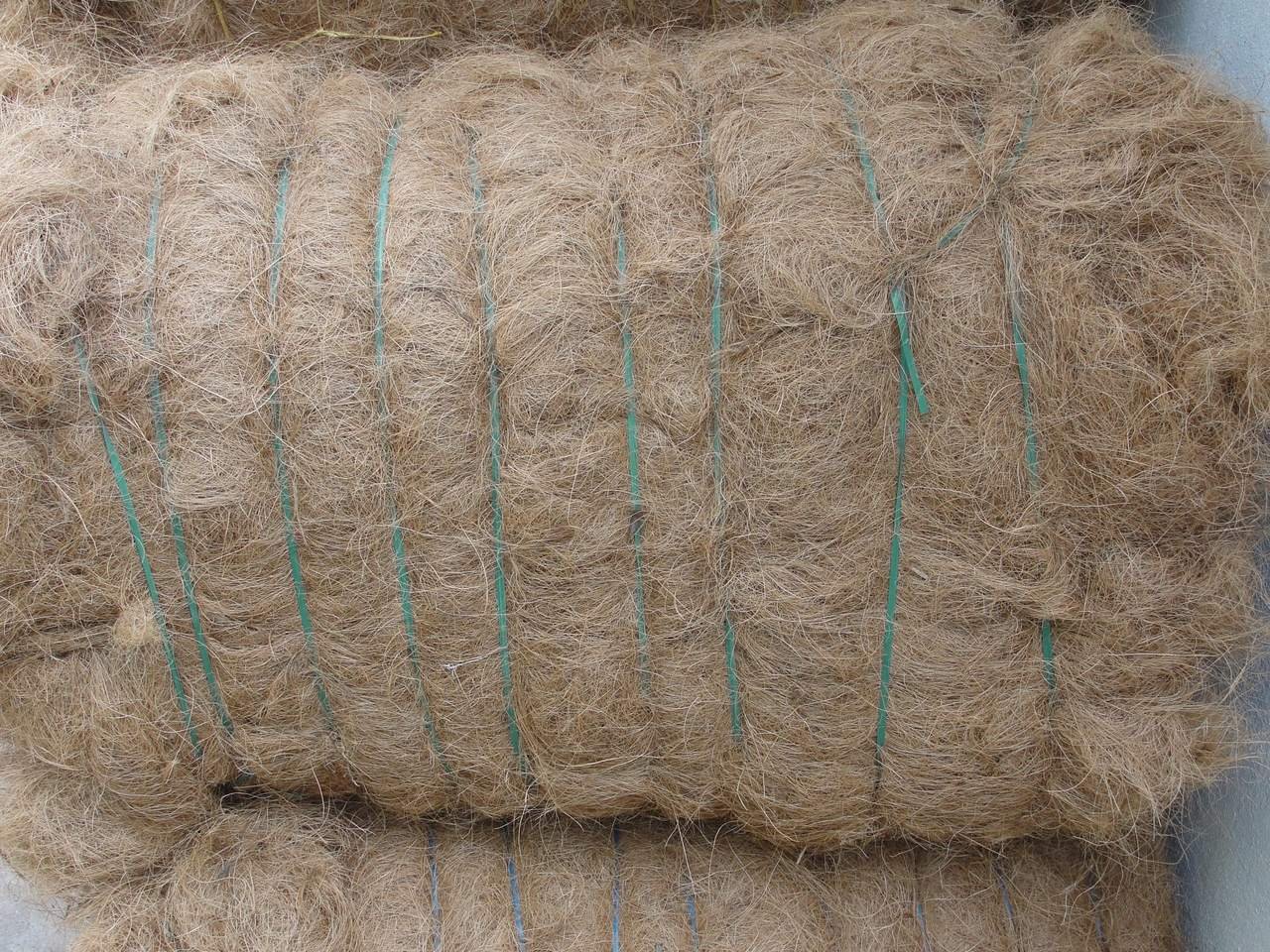
Prepared coir fibre, baled. Representative image. -
Finished-product path: twine
Stage 5: Twine manufacturing
The prepared fibre is cleaned again and fed into our twine-spinning machines.
These machines are designed to produce coir twine with a uniform diameter, and can make different diameters according to the intended finished product and the agreed customer specification.
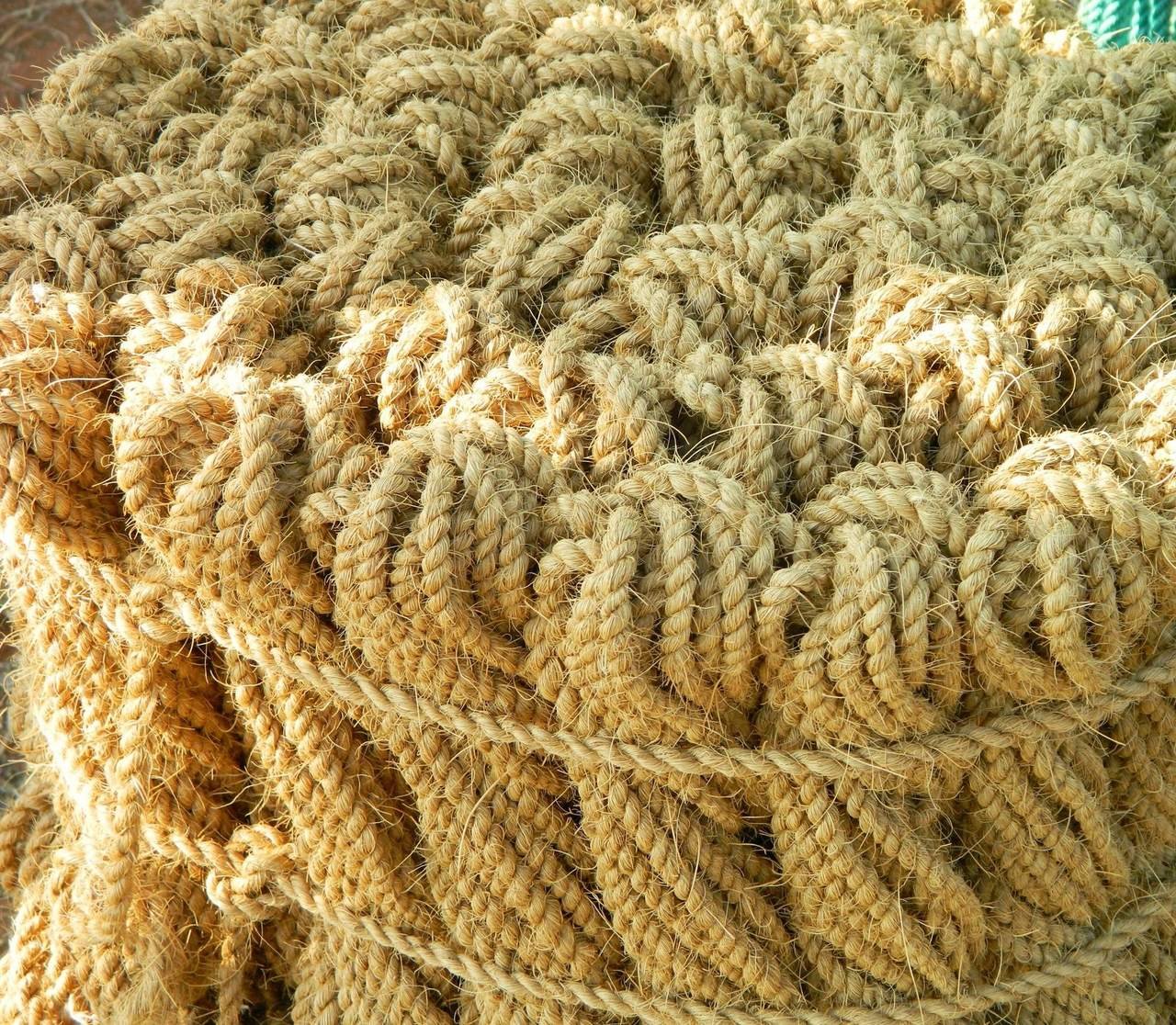
Coir twine, twisted to a uniform diameter. Representative image. -
Finished-product path: geotextiles
Stage 6: Coir geotextile weaving
Coir yarn is used in our weaving operations to produce coir geotextiles in a range of agreed specifications for suitable soil-protection and erosion-control applications.
Raw-material selection and careful fibre preparation help support the strength retention and durability needed in field applications.
Weaving uses coir yarn directly. It is a separate path from twine manufacture.
Construction drawing of the open weave. Not to scale. -
Stage 7: Inspection, packing and export preparation
Finished products are inspected against the agreed requirements before being packed and prepared for shipment.
We coordinate the relevant product identification, packing and export documentation to support each order and its delivery requirements.
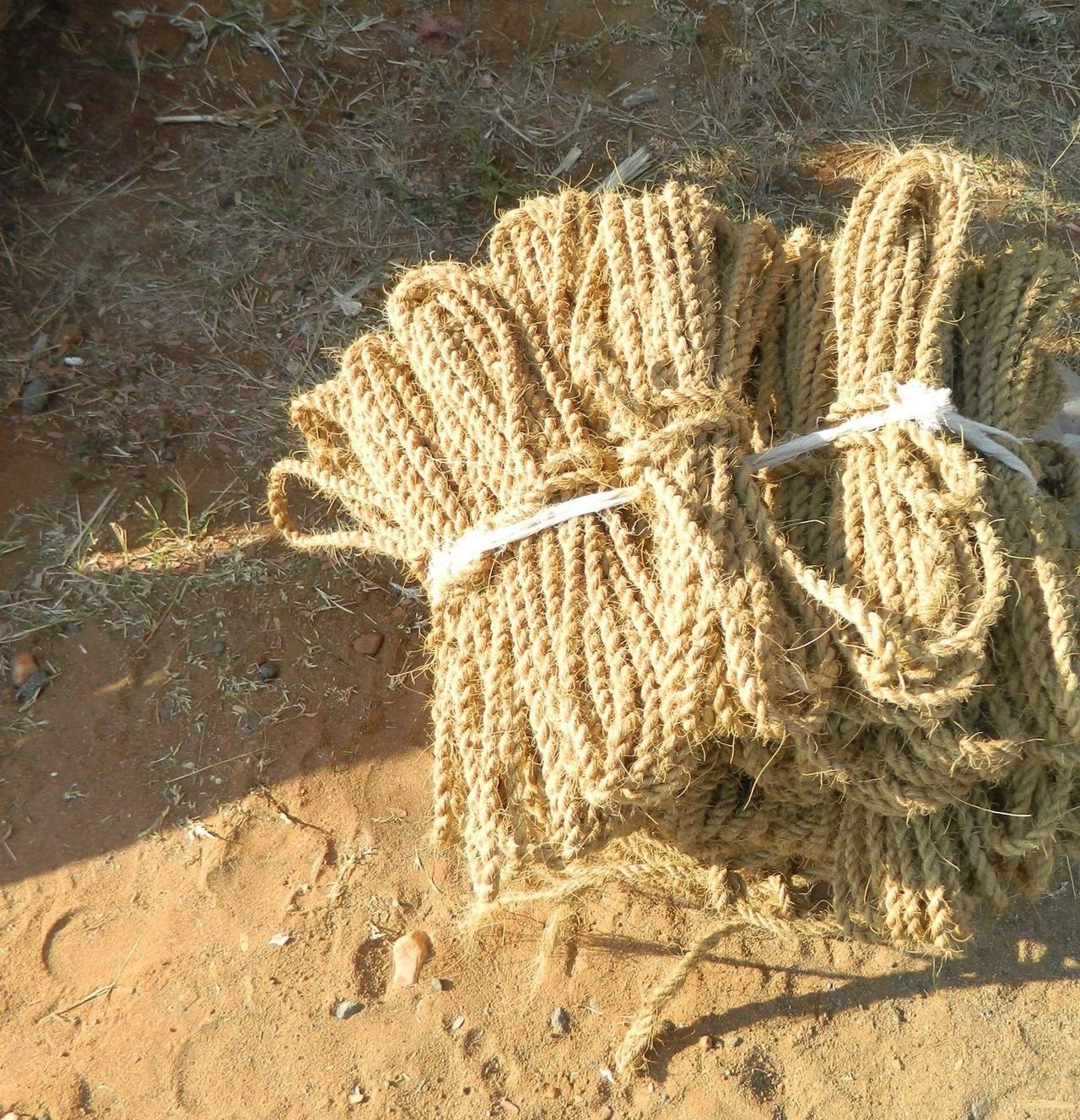
Twine hanks tied and ready for packing. Representative image.
Why it matters
Our manufacturing advantage
Our machinery is designed to improve production efficiency, reduce reliance on labour-intensive processes and support consistent quality. These efficiencies help us work towards offering high-quality products at competitive prices without compromising our focus on quality.
- Involvement from the raw coconut husk procurement stage.
- Direct processing of husks to extract coir fibre.
- Separation of fibre and pith during defibering.
- Further preparation of extracted fibre for product manufacturing.
- Downstream manufacturing of coir yarn, coir twine and coir geotextiles.
- Greater visibility across the production chain.
Process questions
Where does your manufacturing process begin?
Our process begins with the procurement and preparation of raw coconut husks. The husks are traditionally retted in fresh water for several weeks and then mechanically processed to extract coir fibre.
What happens during defibering?
Defibering is the mechanical process used to separate usable coir fibre from pith and other residual material in the coconut husk. Our specialised machinery uses a controlled combing process designed to extract fibre while avoiding unnecessary damage.
Discuss your specification with the people who make it
Tell us the product, quantity, destination and the specification you need. Our export team will review it against production capability.